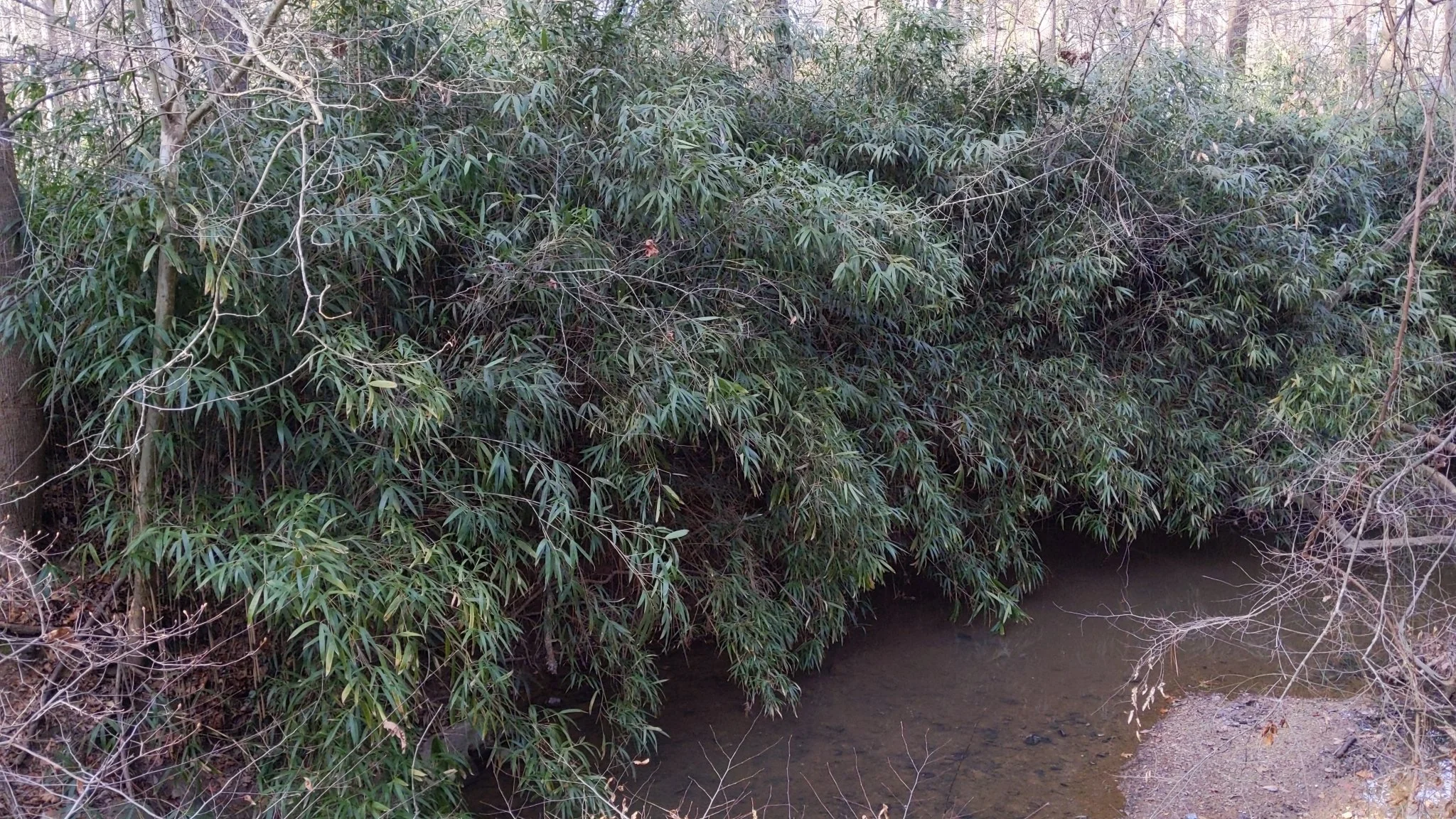
You may think of bamboo as a plant originating in Asia, but we have our own native bamboo, too. River cane (Arundinaria gigantea) is the northernmost of three bamboo species native to the US. Also called native cane or giant cane, this huge grass was abundant pre-colonization, forming canebrakes—vast areas of floodplains covered with river cane. This plant was an important part of our history, and it’s a valuable part of our future in conservation.
River cane as waterway protector
Riparian areas are essential elements of the landscape, buffering waterways from the runoff that comes from the surrounding area. Riparian areas planted with river cane are even more valuable—and to think we’ve lost 98% of dense canebreaks since this area was colonized!
River cane stabilizes streambanks during floods and filters excess nutrients from the water flowing through it. This is thanks to the rhizomes and roots running underground. After Hurricane Helene devastated parts of North Carolina in 2024, riparian areas planted with rivercane experienced dramatically reduced erosion. Scientists have also found riparian areas planted with river cane reduced sediment from overland flow events even more than forested areas.
River cane for wildlife
This native plant provides habitat and forage for birds, mammals, and insects. In fact, researchers have found at least 23 species of mammals, 16 birds, 4 reptiles, and 7 invertebrates in canebrakes. While these are important numbers, realize that even more species once relied on this habitat, but as we lost these stands of river cane, we’ve also lost those species. Interestingly, white tailed deer are not among the mammals that forage on river cane, making this a strikingly interesting deer-proof landscaping plant.
River cane in history
Indigenous people took advantage of river cane’s sturdy nature, using it for basketry, fish traps, construction material, and more. As the land was cleared for agriculture and Indigenous lifeways were erased, the canebrakes were also lost. Today, only about 2% of original canebrake ecosystems remain.
River cane is more than a plant—it’s a piece of Kentucky’s ecological and cultural heritage, and a reminder of what our landscapes once held and can hold again. This spring, Woods & Waters Land Trust worked with local landowners along the Kentucky River in Frankfort to establish new canebrakes—small but meaningful steps toward restoring this lost habitat. Efforts like these help strengthen stream health, support wildlife, and build resilience across the Lower Kentucky River watershed.