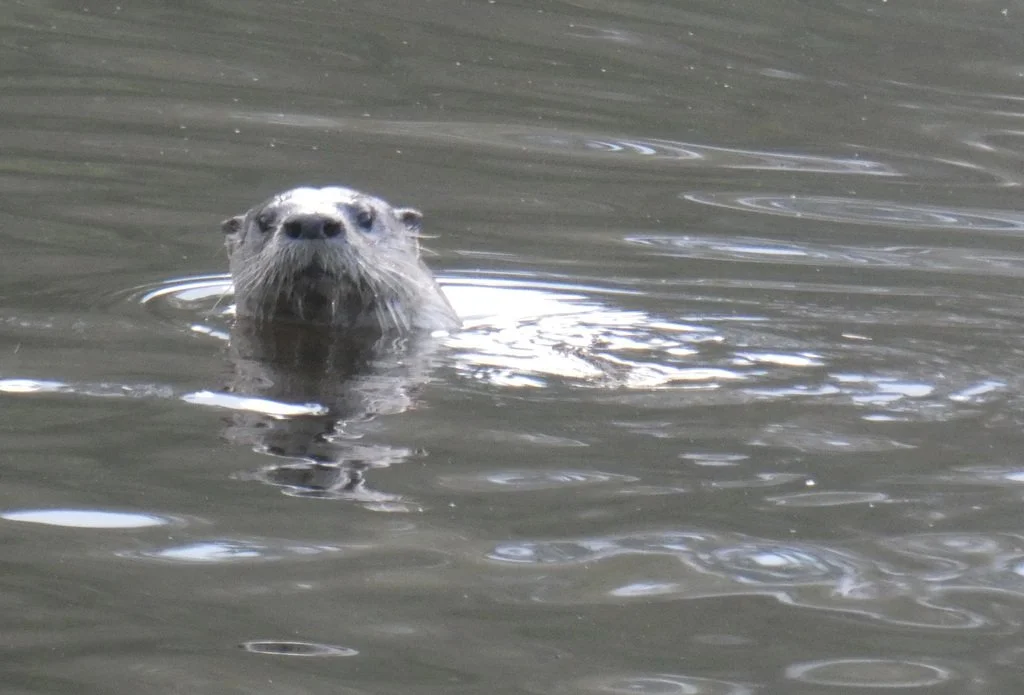
Once abundant across Kentucky, river otter (Lontra canadensis) populations sharply declined due to water pollution and overall habitat degradation, as well as unregulated harvest. Now they’re back, thanks to conservation work, and we get to enjoy their antics as well as their ecological services here in the Lower Kentucky River Watershed.
Because they’re semi-aquatic, they’re often confused with beavers and minks, but river otters have a few distinguishing characteristics: wide heads, often as wide as their necks; short legs, which they hold parallel to their bodies as they swim; webbed feet; long and flattened tails that appear wide from the top and narrower from the side.
Between January and June, females can give birth to as many as three pups. And if you think one river otter tumbling along a river bank and splashing in the water is cute, wait until you see a family doing it. When they’re not playing around, they’re eating fish and crayfish (and sometimes amphibians, snakes, birds, mollusks, insects, and small mammals).
River otters’ presence is an indicator of good water quality, so as long as we have them around, we know we’re on the right track!
Photo taken at the Backbone Wetland. Check out our Facebook and Instagram accounts for the video.